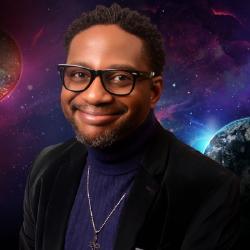
Tony is lead curator of the Nigerian Podcast Index — this interview has been lightly edited for style and readability
Sam and James spoke to Tony Doe for the Podnews Weekly Review
James Cridland: Nigeria is massive, isn’t it? 224 million people who live there.
Tony Doe: And counting.
JC: 60 million people speaking English. 64 million people speaking Housa. But, in the data which comes from the Nigerian Podcast Index, over 90% of shows are in English. Hausa is something like 2.7%. What why aren’t there more shows in Hausa, Tony?
TD: There are lots of shows - but not enough shows registered as podcasts. There’s a lot of Hausa content on radio - community radio, communal radio. But when it comes to podcasting, and I’m still searching, so it’s not as if the journey is over per se, it comes down to platforms. There’s a limit to language options in terms of primary um speech for content creators. So we’re dealing with major languages, um usually English, French, maybe Spanish, languages that seem to have more global appeal. Another thing is education as well. If they know that platforms exist, then they can come on board and speak their languages with a bit more ease.
JC: I guess if you were to use uh Spotify for Creators, then the interface is in English, is it?
TD: It is. Everything is in English.
Sam Sethi: Talking of Spotify, the top podcast host in Nigeria is Spotify. But who else?
TD: There are a lot of podcasters using Buzzsprout. I have friends who are using Buzzsprout, um, and not just using the platform, but actually uh benefiting from all the features of the platform, which means they’re actually monetizing with it. But Spotify has a massive, massive lead. I think Buzzsprout is third, after Spreaker.
SS: Well, I suppose because it’s free, right, Tony? Just I mean, just on the very basis that it’s free that people are gonna go there first.
TD: Yes. But let’s not forget what it was before it became Spotify for Creators, which was Anchor. Besides the fact that it’s free, people could - from their phones - record their content and publish directly. And, Anchor was also submitting on behalf of the creators to the podcast directories. So a lot of people who didn’t even know what was going on with the RSS feeds ended up in podcast directories. There’s a lot of content coming from that time.
JC: I did some training in Ghana and talking about what to put on your radio station uh on your radio station website, and I suddenly realized, that that most people there are accessing the internet through mobile phones, not necessarily through a laptop or a desktop. Anchor was brilliant at that because Anchor had an app that you could use to record stuff straight into Anchor and publish and away you go.
TD: Yes, exactly. I think that’s what’s missing in the space now, and um I think people would actually look forward to some something like that happening again.
JC: What’s the big difference between podcasting in Nigeria and in the UK or the US?
TD: I’d say ours is culturally driven, really. Our lifestyles, our attitudes towards things, our perspectives on issues - hope and faith are really what drives what we do when we create. We’re a very communal society. We like having conversations, loud ones too, talking over each other, and that’s why a lot of the shows you find in the index are chat shows - hosts bringing in guests, panels, four to five hosts sometimes. And then the reason religion kind of works is because there’s already a system that supports it in terms of um its recording and preservation or archiving. Long before podcasting, we used to have cassettes, we used to have um Bibles on tapes, we had preachers who would actually put a series of um monthly sermons or uh quarterly sermons in cassettes and then have these sold. And then when CDs became a thing, it continued with that tradition as well.
SS: How do people make money in Nigeria with podcasting?
TD: That is the million dollar question, the money question itself. Te the successful podcasts are tied to local networks, which means that the creators themselves may not even be involved in the monetization process. They probably just get paid fees or salaries. For the independent ones - me for instance - I don’t exactly monetize my show, but there are skills that I exhibit through my show that enable me to monetize, one of which is voiceover work that I do. I also produce podcasts, I also produce radio commercials and jingles. So these are like audio adjacent things I do.
JC: Where should people look to find more?
TD: Um the website is up for the Nigerian Podcast Index. You can find me, Tony Doe - I’m everywhere. LinkedIn, Instagram, X, Threads.
SS: Tony, thank you so much, and uh congratulations by putting together the index.
TD: Thank you, Sam.