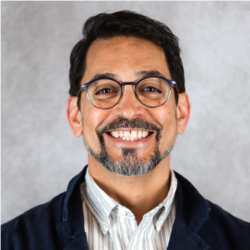
Richard is CEO of Voxtopica — this interview has been lightly edited for style and readability
Richard Fawal: Voxtopica is a full-stack podcast agency. It was founded in 2019, out of a consulting firm that I had founded. We are designed to help people in nonprofits, government agencies, trade associations, and the general mission-driven world, to have success in podcasting.
Sam Sethi: Why that narrow niche?
RF: That’s my background over the last 35 years, working in and for organizations like that. But a bigger reason is that it’s a very underserved niche within the podcast industry. As you know, podcasting is very democratic. Almost anyone can get involved and get started and make a podcast. And it offers an incredible opportunity to mission-driven organizations and nonprofits, to reach an audience in ways that they can’t with any other medium or media. So we felt it was important to make sure they were doing their best work in the medium. We decided that market was being terribly underserved in the mission-driven world, and we decided to focus exclusively on that.
SS: So, how do you differentiate and help your clients?
RF: The key things that we help them do is understand, first of all, the landscape that they work in, which is very different than commercial podcasting. Nonprofits are governed by budgets and timelines and bureaucracy. There’s not a lot of education in the podcast world on sort of how to deal with those things. So we help them understand how to communicate effectively within their organization about what podcasting is and how it can help them, using language that is better understood by the nonprofit world. Instead of talking about downloads, we talk about engagement and reach to an audience you’re trying to reach. And instead of consumption rates, we talk about depth of the message, because that’s language that they use in this environment. Bosses and directors and executive directors understand that better than talking about downloads and consumption rates. That’s just one example.
SS: When you get a client come in, what is their brief to you to measure success?
RF: We spend a lot of time talking to clients about what their goals are and how those goals for the podcast are aligned with the mission of the organization. So if you are, for example, a healthcare advocacy group working in cancer or some other illness, what’s the mission of the organization? How can a podcast help you and your organization achieve that mission? Then we design the show around that. Often it’s driving people to a specific website, or getting them to take some action - joining the organization or sending a message to an elected official about funding some research project, those types of things. But it’s very much geared toward defining those actions, and then measuring those actions: and almost never has anything to do with revenue.
SS: So given that they’re nonprofits, is it a cost center to them? Or is there another way that you make it into a revenue generation tool?
RF: We talk about mission-driven podcasting and we often compare them to commercial podcasts. But non-profit podcasts can actually have revenue. Subscriptions do work sometimes for nonprofits, if the quality of the content and the value that it’s providing is high enough. But, ultimately for most of them, they don’t want to go that route. It’s an extra layer of complexity, and sometimes it just doesn’t feel right to them. So we build in other metrics and we try to keep their costs as low as possible.
Often the mistakes that they make are that they come in thinking, well, great, we’re just going to turn our newsletter into a podcast, or we’re just going to, go over the last white paper we’ve done. One of the things we have to help them overcome is to remind them that their podcast is only going to be listened to by people who listen to podcasts. We’ve spent a lot of time helping them understand what are the basics of how podcast listeners, how podcast audiences behave, the way they consume, the way they choose what podcast to listen to; all to help them understand that their white paper isn’t going to make an interesting podcast. But they can take what’s in that white paper and make it very engaging - if they think about the audience first.
SS: Video is a hot topic. When do you advise your clients to go from an audio to a video solution?
RF: We used to tell our clients a couple years ago that it’s too much effort, it’s not worth the budget, it’s not worth the time. But in the last year, we have started telling all of our clients - let’s talk about how we make a video component to your show. It’s become easier, it’s become less expensive, and as we all know in podcasting, it’s simply a great way to grow your audience and reach more people.
Most of the shows we do are chat shows because that’s the easiest and simplest thing to do for nonprofits. A few years ago, everybody was nervous about that because we were doing everything remotely, but that is not a problem anymore. Doing a descript or riverside remote recording and putting that out is absolutely acceptable to the podcast audience. And the costs have come down to the point where we can do a lot of video production for our clients without significant increases in their costs.
SS: Do you use clipping? One of the strategies that I’ve seen a lot now is clipping. I’ve never seen a Joe Rogan or listened to a Joe Rogan show, but the clips are sufficient to get a taste.
RF: We do, but we’re selective about it. One of the great things about podcasting, of course, is that it is an intimate platform. You can go into a great deal of depth. So for clients who are essentially explaining a white paper we want to keep their clips to a minimum because the audience that they’re reaching is extremely niche - people who work in a very specific kind of healthcare or very specific kinds of industry. And so the podcast is an opportunity to go in depth in a way that nothing else they do can do. Somebody can learn everything they need to know about a white paper on their commute rather than sitting down and having to read through it.
For other clients, it makes an enormous amount of sense to do clipping, particularly when there are key points they are trying to hit in every episode. So for those clients, we support and help them do a significant amount of clipping. Interestingly, we find that a lot of our clients come to us who’ve never done podcasts before, and they come to us specifically because they want to do clipping - “we want to make a show so that we can develop and release clips from the show to support our social media program”. And we often have to say, well, if you’re gonna do that, we might as well make the best possible show because we’re still gonna release it as a podcast.
SS: So what’s next for Voxtopica?
RF: We’re really focused this year and next to help the podcast industry itself understand how valuable the mission-driven part of the industry really is. It gets forgotten. There’s not much content at the big podcast conferences that is geared toward people who aren’t chasing revenue, but are chasing the right kind of listener. So we’re really working to educate the industry about how valuable and important this audience is, helping brands understand that there may be some white hat opportunities to partner with nonprofits and put out mission-driven content that their brand can be applied to, instead of just lead gen branded content or brand awareness.
There’s two other things that we really focus on. One, we do a lot of work in sort of the public affairs space, politics adjacent. So we do every year a we do research on how podcasts influence voters and voters’ decisions. We’ll have our next survey coming out in August. And then our big plan is to really start taking what we’ve learned about nonprofit podcasting and doing more research around that. For example, there’s no really good accounting of how many of the millions of podcasts out in the world were produced by nonprofits or were produced with a mission-driven purpose. We want to spend some time really trying to understand how big a market is mission-driven podcasts, to make sure that this is a respected part of the podcast industry.
SS: Richard, thank you so much.
RF: Thank you, Sam.